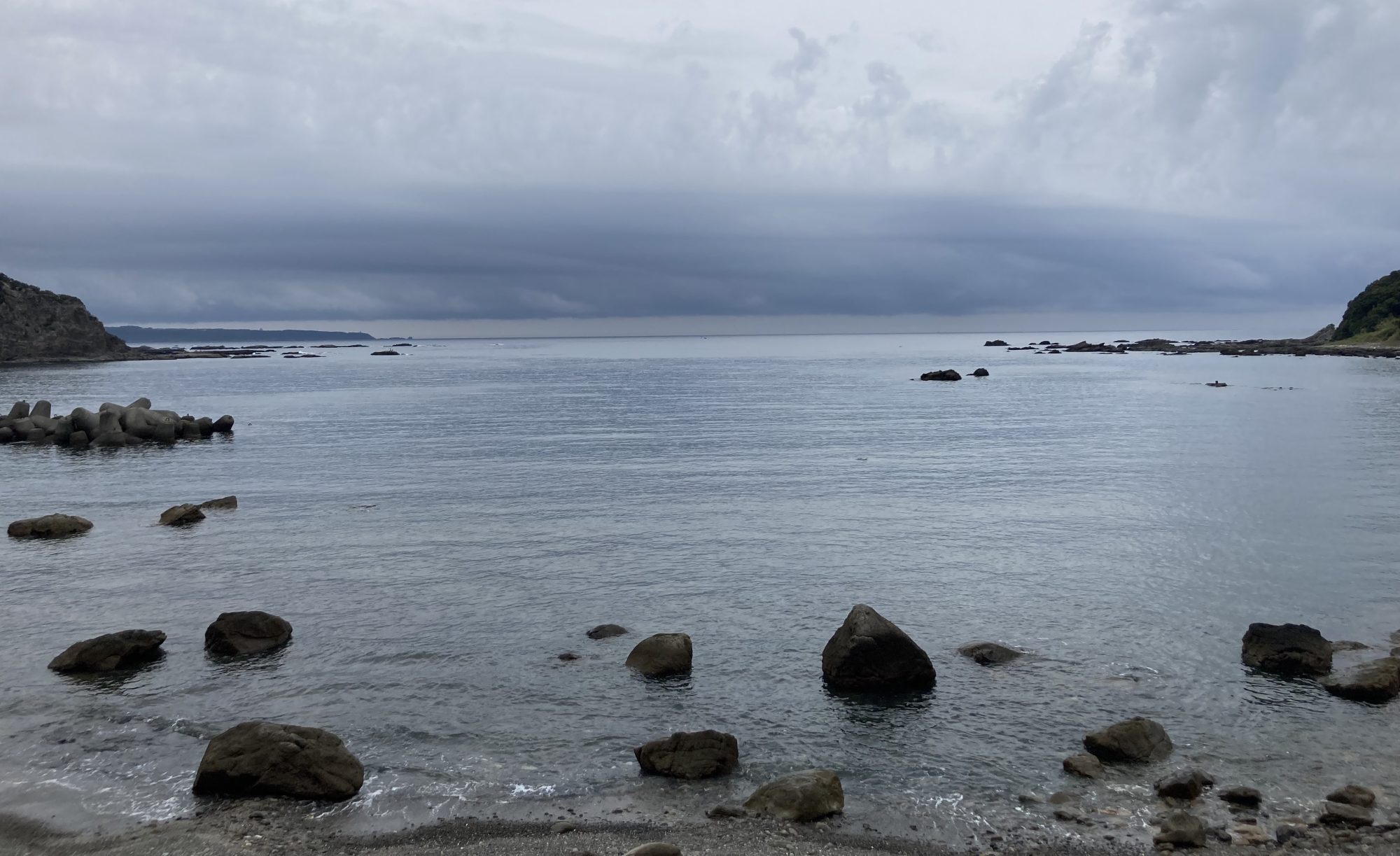
Yasuo Akai is a Japanese composer and translator from Tokyo whose work I admire. Last spring we sent each other a number of tracks and sketches to work with. Yasuo just published one of the pieces and it is quite brilliant!
Sounds that evoke a unique sense of elegance.
Go here- to listen
You can visit Yasuo’s blog here
Category Archives: insights from other artists
Creative Commons-Net Labels
This is essential reading when it comes to the importance and value of archiving Net labels. I have already recommended a number of sites that promote net label artist and I will continue to do so. I have also been fortunate to have a number of my own works released on various net labels. The net label community remains one of the most exciting places to explore new and innovative music on the web; it would be a real pity if the artistic contributions of many were never archived. The curators who run many of these sites and blogs also need to be acknowledged and supported. Their discoveries are our rewards.
Heritage Film Festival
I was really pleased to see O.Funmilayo Makarah mentioned in this series. I’ve had the privilege of knowing her and being part of the Heritage Film festival series since its inception. She is an exceptional filmmaker and curator who is still open to new ideas in cinema and video. Here are a few articles about the groundbreaking work she and other filmmakers were doing at UCLA a few years back-
LA Times
and something on the Heritage Film festival here
check out her work if you can!
Great Resources for new sounds
Afternoon Traces was mentioned this week in Kulturterrorismus a webzine for neoclassical, ambient industrial, and noise based in Europe. I spent the afternoon listening to number of works-Tremendous sounds
I also discovered Morning Trees was mentioned in the blog The Easy Pace. According to their page-The Easy Pace posts the possibilities of good listening in a Creative Commons environment. Both sites are designed and curated with care and offer listeners a great way to discover incredible music and artists for free! Check them out!
Robert Robertson’s lectures at the BFI

Robert Robertson talks a bit about his lectures here on his blog-I am really moved to be on this list of directors he discussed-I also have his notes on the Dream film below. Robert’s analysis, enthusiasm, and overall knowledge of his subject area is peerless in my humble opinion. I would recommend purchasing his book if you are interested in Eisenstein, cinema, and the act of creation… from Robert Robertson:”
…This concentration on a single element is also characteristic of dreams. You get it in the writing of Edgar Allan Poe. Eisenstein mentions Poe’s startling impression of a giant insect climbing a mountain, which he sees when he looks up out of his window. Then he realises that he is seeing the insect on the window itself. The creature looks enormous in comparison to the mountain in the distance. This confusion of foreground and background is fascinating for Eisenstein, as it’s an interesting example of montage within the shot.
This type of spatial distortion is used in this film by the American filmmaker and sound artist Chris Lynn. It’s an evocation of a famous poem by Edgar Allan Poe: Dream Within a Dream, which has the line: “All that we see or seem is but a dream within a dream.”
5. Chris Lynn: Reading Dream Within a Dream.
But what is happening audiovisually here?
It’s a form of audiovisual counterpoint: the sound is a recording of a public library in Alençon, an echoing space. Alençon is where Baudelaire at last found a publisher for Les fleurs du mal, the Flowers of Evil collection of his poems. And he made Poe’s work known to continental Europe through his translations of it into French.
There’s a similarity in this film by Lynn with Sokurov’s use of sound in that extract we experienced last week, from his Mother and Son. In Lynn’s film the library sounds don’t immediately fit with the images we see (in fact they are thousands of miles apart) so this creates an extra dimension of meaning. It’s a quality that is fundamental in cinema: it lies at the root of editing, and various kinds of montage.
Eisenstein, when he was learning about cinema, attended Kuleshov’s Film Workshop for three months, during the winter of 1922/23. What came to be known as the ‘Kuleshov Effect’ is at the heart of how cinema works. [Kuleshov Effect Washington/Moscow anecdote].
Here Chris Lynn is using an audiovisual Kuleshov Effect, the discrepancies between sound and image force us to try to make a connection between them, and so they create a dreamlike sensation. This confusing quality is analogous to Lynn’s montage within the shot, like Poe, blending the foreground with the background: water on the windowpane and the tree outside, creating spatial distortions in motion.”
Robert’s book can be puchased here
Robert Robertson’s Lectures at the BFI On Eisenstein Audio Visual Pioneer- New Link!
Here is the info on Robert Robertson’s lectures on Eisenstein in May-As I mentioned earlier, he will be screening Dream Within A Dream-during one or two of these lectures…
more details soon-If you are in London-I would not miss this!
L’ÉTRANGER, RADIO PANIK 105.4FM, BRUSSELS
Voices near a Temple a Track from Near Lakes and Voices was played on The Radio Panik show in Brussels-The link is here.
Here is a review about the show The Wire Magazine
L’étranger can be regarded as a story which you can skip if you want. It can be seen as a story you will get more out of if you don’t skip. It can be seen as a kind of symphony, or in another way as a kind of opera: or even a horse opera. It is hot music, a poem, a song, a comedy, a farce, and so forth. It is superficial, profound, entertaining, and boring, according to taste.
It is a prophecy, a political warning, a cryptogram, a preposterous movie.
“That guy in Brussels…” – Bob ‘Dean’ Dobbs
Electronic Musik Sampler

Innovative sound artists on this excellent sampler curated by Ian Simpson. Go here to download-
cover art: Ian Simpson
Robert Robertson

image:Oserake-Robert Robertson
An amazing read! Highly recommended

 Framing sounds
You must be logged in to post a comment.